
My water pressure dropped suddenly
A sudden drop usually points at something discrete: a partly closed main valve, a failed pressure regulator, a leak on the service line, or work on the municipal supply. A gradual decline over years points instead at scale narrowing the inside of older pipe. The pattern matters for diagnosis.
Do this first
- Check whether it affects the whole house or one fixture. One fixture is usually an aerator.
- Check your main shutoff valve is fully open. It gets partly closed more often than you would think.
- Look at the meter with all water off. If the leak indicator is moving, something is running.
- Check whether neighbours have the same issue. If so, it is likely the municipal supply.
What it usually is
- A partly closed valveThe free fix, and worth checking before anyone comes out.
- A failed pressure regulatorA common and moderate repair. Also worth knowing: too much pressure causes its own damage.
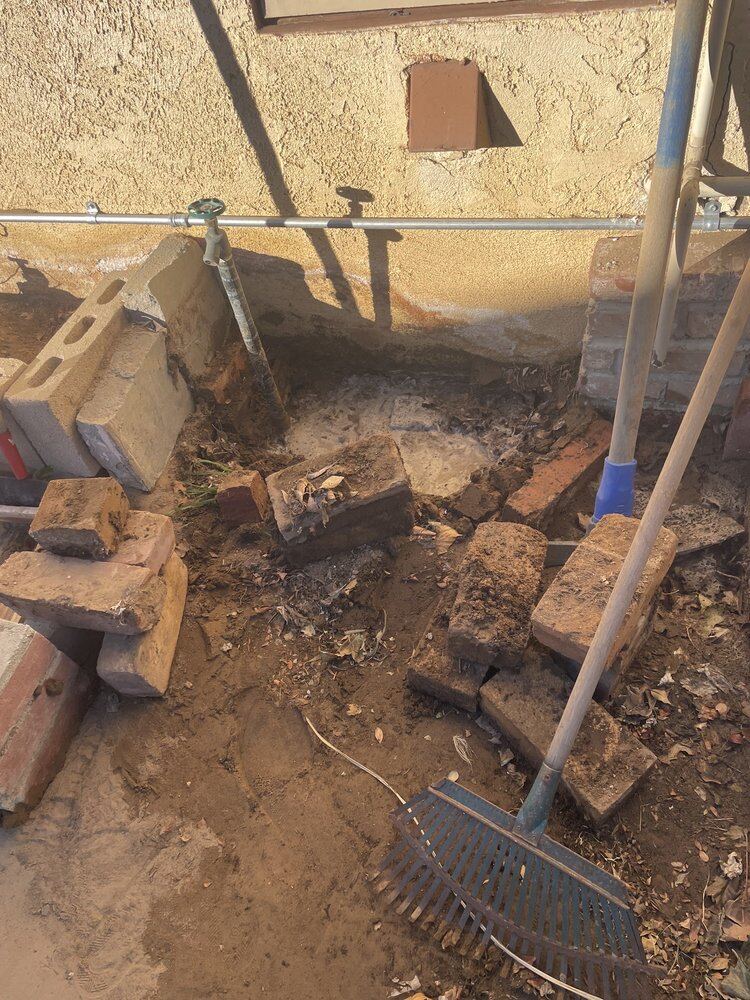
- A service line leakBetween the meter and the house. Often shows as a wet or greener strip in the yard.
- Scale in older pipeA gradual decline rather than a sudden one. This one is a repipe conversation.
When to call, and when it can wait
If you do need us
Measure it
A gauge on a hose bib gives a number instead of an impression. This is the first step every time.
Separate supply from restriction
Static pressure and flow together tell us which one you have.
Check the regulator
The most common cause of a sudden whole-house drop, and a moderate repair.
Re-measure after
You get a before and after number rather than a promise it is better.
Houston note
Houston's water is hard, and mineral build-up in aerators and showerheads is a genuinely common cause of what people report as low pressure at one fixture. Soaking the aerator is free and solves it more often than people expect.
Related problems
What moves the price
- CAUSEValve, regulator, service line, or scale — four very different prices.
- ACCESSWhere the regulator and main sit.
- SCOPEA repair versus a service line replacement.
Questions about this
Do I need a booster pump?
Almost certainly not, and it is the most commonly mis-sold item in this category. Boosters are for genuinely low supply pressure from the street. A gauge reading settles it in minutes, and the answer is usually a regulator instead.
Can pressure be too high?
Yes, and it is underappreciated. Excess pressure stresses fixture seals, appliance valves, and joints, and it is a hidden cause of repeated small leaks. If we measure high pressure, a regulator is the fix.
Only my shower is weak. Is that the same problem?
No. One fixture pointing low almost always means a clogged aerator or showerhead, or a failing cartridge. That is a small job and worth trying a cleaning first.
Not sure how urgent it is?
Describe what is happening and we will tell you straight: call an emergency out now, book it for today, or leave it until the week.